
Why Finding the Right Arlington Youth Wellness Services Feels So Hard (And Where to Start)
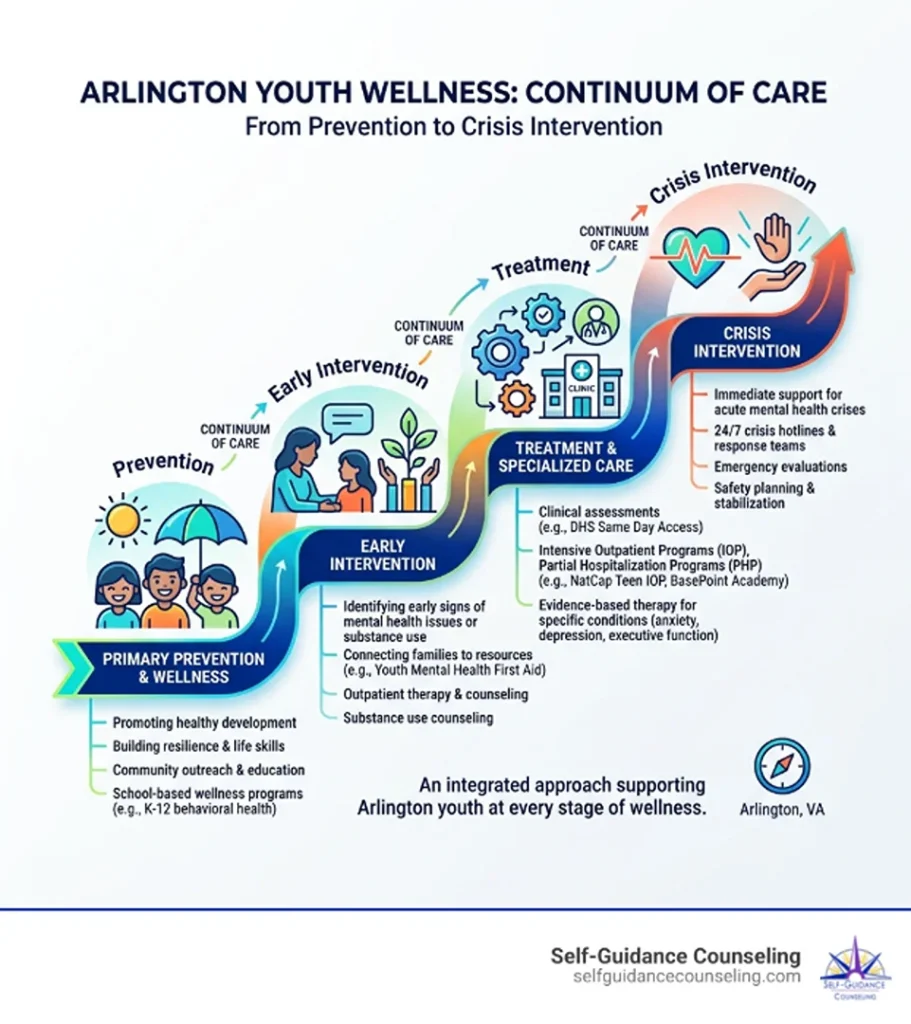
Arlington youth wellness services cover a wide range of options—from free crisis support to school-based therapy to private coaching. Here’s a quick overview of the main types available:
If your teen is struggling with anxiety, low motivation, executive function challenges, or just feeling stuck, you’re probably already overwhelmed. There are dozens of programs, phone numbers, acronyms, and eligibility rules to sort through.
And here’s the honest truth: the system is fragmented. Crisis services, school-based programs, substance use treatment, and community prevention efforts all exist—but they don’t always talk to each other. That gap between “getting help” and “actually feeling better” is real. Many families find clinical services, but still need something more: skills, structure, and ongoing support to help their teen build confidence and independence over time.
This guide breaks down every major category of Arlington youth wellness services clearly, so you can find the right fit without the confusion.
Understanding the Landscape of Arlington Youth Wellness Services
Navigating the local landscape of Arlington youth wellness services requires understanding that support isn’t a “one-size-fits-all” solution. The system is designed to catch kids at different stages of need, ranging from those who need a weekly check-in to those in the middle of a mental health crisis.
One of the most prominent fixtures in our community is the Arlington Youth Counseling Center (AYCC). Located in the historic Whittemore Robbins House, AYCC serves as a primary provider for outpatient and school-based mental health care. They focus on being inclusive and culturally sensitive, ensuring that families can access therapy regardless of their ability to pay.
However, clinical therapy is only one piece of the puzzle. While a therapist might help a teen process trauma or manage a diagnosis, many young people still struggle with the “how-to” of daily life. This is where the distinction between clinical care and proactive coaching becomes vital. At Self Guidance Counseling, we believe that wellness is a spectrum. While the county provides excellent clinical interventions, our coaching services focus on the action-based side of the coin—helping teens build the habits and mindsets they need to thrive in school and at home.
The School-Based Behavioral Health Programs within Arlington Public Schools (APS) are another critical pillar. By placing clinicians directly in the schools, the county reduces barriers like transportation and scheduling. These programs are voluntary and require parental consent, providing a seamless and highly accessible way for students to receive mental health support during their normal school day without missing a beat.
Beyond the Basics: Coaching for Action and Growth
While clinical therapy addresses mental health diagnoses and trauma, many families find themselves asking, “What’s next?” Your teen might understand their anxiety but still struggle to hand in homework on time, manage their schedule, or navigate peer conflicts effectively.
This is where teen wellness coaching Arlington comes in. Coaching focuses on the present and the future. It’s about building executive function skills, emotional resilience, and daily routines that actually work in the real world.
For older adolescents navigating bigger life transitions, young adult wellness Arlington programs help bridge the intimidating gap between high school and college, or college and the workforce. The focus shifts from managing day-to-day high school stress to fostering true, sustainable independence.
Frequently Asked Questions (FAQs)
What is the difference between therapy and wellness coaching? Therapy is clinical and often focuses on diagnosing and treating mental health conditions, processing past trauma, and emotional healing. Coaching is action-oriented, focusing on building practical life skills, improving executive functioning, and creating forward momentum. Many teens benefit significantly from doing both simultaneously.
How do I know if my child needs crisis intervention or just regular counseling/coaching? If your teen is experiencing immediate safety concerns, severe distress, or thoughts of self-harm, immediate crisis intervention (such as emergency psychiatric services or a local crisis response team) is required. For ongoing, non-acute support with anxiety, motivation, organization, or life transitions, outpatient counseling or coaching is the right fit.
Can coaching help if my teen refuses therapy? Yes. Often, teens who are resistant to traditional “talk therapy” are more open to coaching. Because coaching focuses on practical goals, everyday skill-building, and action rather than clinical labels, it can feel less intimidating and more empowering for young people who simply feel “stuck.”
Conclusion: You Don’t Have to Do This Alone
Navigating the maze of Arlington youth wellness services can feel like a full-time job, but understanding the difference between clinical care, school-based programs, and action-oriented coaching is your first step toward finding real relief for your family. You don’t have to wait for a crisis to seek support, and you certainly don’t have to figure it all out by yourself.
If you are looking for practical, action-based support that helps your teen or young adult build confidence, improve executive function, and thrive in daily life, we are here for you.
Ready to help your teen get unstuck? Visit Self Guidance Counseling to learn more about our services and see how our coaching approach can complement your teen’s wellness journey. If you have any other questions, explore our FAQs or contact us directly to start the conversation today.